

I’m a new parent and I’m really feeling the strain around going back to work. I feel the need to work as if I don’t have kids and parent as if I don’t have a job. The pressure is crushing. How do I find peace and balance as a working parent?
New parents, and especially new moms, often find themselves within a challenging system when they need to go back to work. They may be feeling stress around issues like:
- Childcare: finding it, trusting it, relying on it consistently, affording it
- Increased mental demands throughout the day, starting with packing bags in the morning: Does everyone have what they need for their day? Is the diaper bag fully stocked? Are lunches packed? Are the pump parts clean and packed? Does anyone need a change of clothes?
- A major shift in the rhythm of life and a loss of opportunities to recharge: nights run straight into mornings, then straight into drop off (my child is crying, am I a good parent? Or, my child is happy, do they even know who I am?), then straight into work (don’t forget to take breaks to pump so your supply doesn’t drop and you don’t get a clog!), then straight to pick up (don’t be that parent who’s late because of their job), then straight to dinner time, then bath time, then bed time… wash, rinse, repeat…
- Added worry and stress during the work day or home time: I’m at work but my brain feels like mush. I’m at work but is my baby okay? I feel like I’m forgetting something. I’m at work but what if something happens and I need to pick my kid up or if they’re sick and can’t go to the sitter, and how much PTO do I even have?
While women often experience a unique set of issues, many men may also find themselves having to merge their budding parent identity with a professional role. In some cases they experience:
- The catch-22 of feeling intensified pressure to provide financially for a growing family while easily being typecast as a workaholic or having messed up priorities if their family doesn’t get the majority of their time and attention.
- Feeling spread thin at work and home with insufficient leave: How am I supposed to support my partner, bond with my child, and adjust to fatherhood in my (on average) less than 2 weeks of paternity leave?
- Alienation or lack of understanding in the workplace: I’m the only one on my team with a family, which was especially obvious when my co-workers asked how my vacation was when I came back from paternity leave.
The truth is, parenthood is a transition that requires us to redefine ourselves, even as we juggle all the external roles and expectations. Recently, a client of mine described her experience in terms of Maslow’s hierarchy of needs. She felt that before having a baby she had been moving and growing through the levels of love and belonging, self-esteem, and self-actualization. Since having a baby (18 months ago), it was as though she’d been knocked back down to the bottom and was still just trying to master meeting the basics of safety and security and physiological needs.
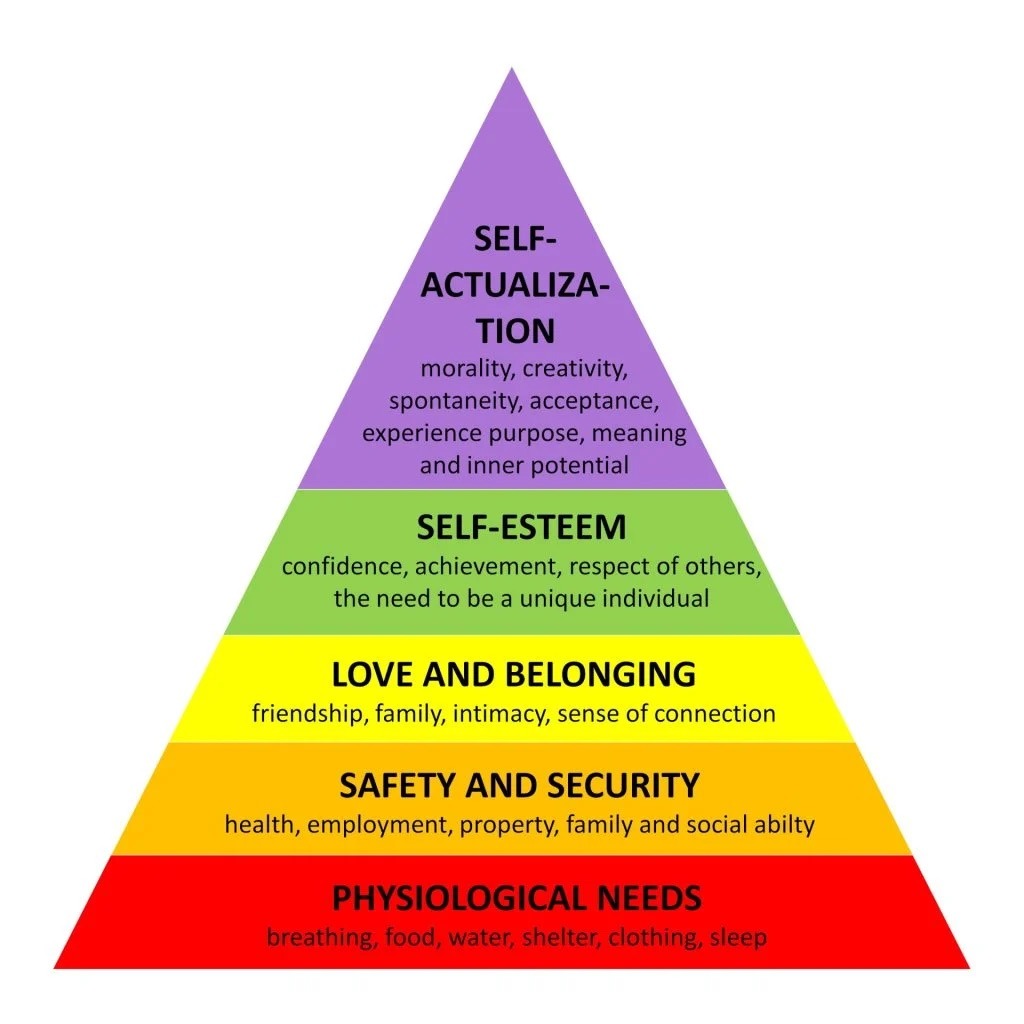
I offered a different perspective on this common struggle: “You’re not failing at being a caterpillar, you’re learning to be a butterfly.”
As a new working parent, you’re not in the same pyramid as before — you leveled up into a new self that includes another who is fully dependent on you for their needs. This process is about redefining your identity. Having support, along with a lot of self-kindness, can be helpful. Practically speaking, it is also helpful to see both caregiving tasks and work performance as morally neutral. This means you are still a good and competent person regardless of dishes in the sink and a longer lag time responding to emails at work. Sitting with the discomfort inherent in this change along with a lot of grace and patience allows us to move into a mindset where our worth is not in producing an outcome. Instead we can experience our growth and development into new parenthood as valuable in its own right.
If you are a new working parent experiencing stress and crushing pressure, please reach out. Request a consultation for family therapy, marriage counseling, or individual therapy. Support from a therapist through virtual sessions or in person meetings in Bethesda, MD can help.

This post was written by Sammi Steininger, an experienced, independent marriage and family therapist at Capital Crescent Collective in Bethesda, MD.